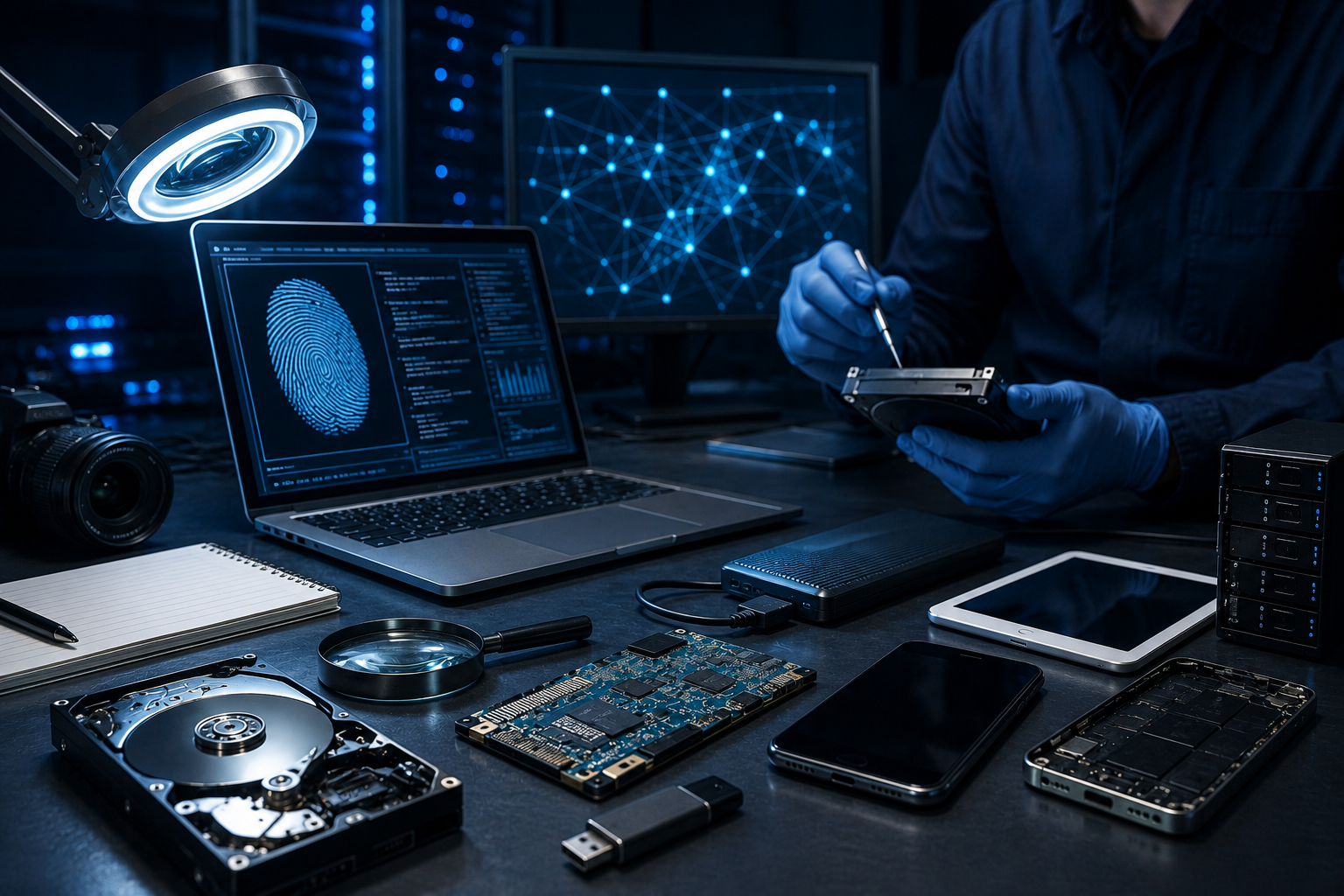
What is Digital Forensics? A Complete Beginner's Guide to Digital Investigation
Introduction
In today's digital world, computers, smartphones, cloud services, and the internet are part of our daily lives. Unfortunately, criminals also use these technologies to commit offences such as hacking, online fraud, identity theft, ransomware attacks, and cyber espionage.
When a cybercrime occurs, investigators need scientific methods to identify the offender and collect evidence that can be presented in court. This is where Digital Forensics plays a vital role.
Digital forensics helps investigators recover, preserve, analyze, and present digital evidence from electronic devices while ensuring the integrity of the evidence.
What is Digital Forensics?
Digital Forensics is the process of identifying, collecting, preserving, examining, analyzing, and presenting digital evidence from electronic devices in a legally acceptable manner.
Simply put:
Digital Forensics is the science of investigating computers, smartphones, networks, and other digital devices to find evidence related to crimes or security incidents.
The main objective is to discover what happened, how it happened, who was responsible, and when it occurred.
Simple Example
Suppose a person's online banking account is hacked and money is stolen.
A digital forensic investigator examines:
- The victim's computer
- Mobile phone
- Login history
- Browser records
- IP addresses
- Server logs
- Email records
Using this information, investigators identify how the attacker gained access and collect evidence that can support legal action.
Why is Digital Forensics Important?
Digital forensics helps in:
- Investigating cyber crimes
- Recovering deleted files
- Identifying cyber criminals
- Preserving digital evidence
- Supporting law enforcement investigations
- Assisting court proceedings
- Detecting insider threats
- Investigating data breaches
- Responding to ransomware attacks
- Protecting organizations from future attacks
Objectives of Digital Forensics
The primary objectives include:
- Identify digital evidence.
- Preserve evidence without altering it.
- Recover deleted or hidden information.
- Analyze digital data.
- Reconstruct events.
- Identify suspects.
- Prepare evidence for court.
- Maintain the integrity of evidence.
Digital Forensics Investigation Process
A digital forensic investigation generally follows these steps:
1. Identification
Investigators identify devices that may contain digital evidence.
Examples:
- Laptop
- Desktop
- Smartphone
- External hard drive
- USB drive
- CCTV DVR
- Cloud account
- Email account
2. Preservation
Evidence must be protected from modification.
Investigators may:
- Disconnect devices safely.
- Create forensic images.
- Use write blockers.
- Calculate hash values.
- Document every action.
The original evidence should never be altered.
3. Collection
Digital evidence is collected using specialized forensic tools.
Examples include:
- Disk images
- Memory dumps
- Mobile data extraction
- Server logs
- Email records
- Cloud data
4. Examination
Investigators examine the collected evidence to locate relevant information.
Examples:
- Deleted files
- Internet history
- Documents
- Photos
- Videos
- USB activity
- Installed software
- Chat messages
5. Analysis
The investigator analyzes the evidence to answer questions such as:
- Who committed the crime?
- How did the attack occur?
- Which files were accessed?
- What data was stolen?
- When did the incident happen?
6. Reporting
Finally, a detailed forensic report is prepared that includes:
- Investigation methods
- Evidence collected
- Findings
- Timeline of events
- Conclusion
The report may be used in court proceedings.
Types of Digital Forensics
1. Computer Forensics
Focuses on desktops, laptops, and storage devices.
Examples:
- Deleted file recovery
- User activity analysis
- Browser history examination
2. Mobile Forensics
Deals with smartphones and tablets.
Examples:
- WhatsApp chats
- SMS
- Call logs
- Photos
- GPS locations
- App data
3. Network Forensics
Investigates network traffic and communication.
Examples:
- Suspicious IP addresses
- Network attacks
- Data transfers
- Firewall logs
4. Memory Forensics
Analyzes RAM (volatile memory).
Examples:
- Running processes
- Encryption keys
- Malware
- Active network connections
5. Cloud Forensics
Investigates cloud environments.
Examples:
- Google Drive
- Microsoft OneDrive
- Dropbox
- Cloud server logs
6. Email Forensics
Examines email communications.
Examples:
- Email headers
- Attachments
- Sender information
- Phishing emails
7. Malware Forensics
Studies malicious software.
Examples:
- Ransomware
- Trojan
- Worm
- Spyware
- Rootkits
Common Sources of Digital Evidence
Digital evidence may come from:
- Computers
- Smartphones
- Hard disks
- SSDs
- USB drives
- Memory cards
- Cloud storage
- CCTV systems
- Smartwatches
- GPS devices
- Email accounts
- Social media platforms
- Web browsers
- Servers
- IoT devices
Digital Forensic Tools
Some widely used forensic tools include:
- Autopsy
- FTK (Forensic Toolkit)
- EnCase
- Magnet AXIOM
- Cellebrite UFED
- X-Ways Forensics
- Volatility Framework
- Wireshark
- Sleuth Kit
- Oxygen Forensic Detective
Real-Life Example
An employee secretly copies confidential company files to a USB drive before resigning.
The company's digital forensic team investigates the employee's laptop and discovers:
- USB connection history
- File copy timestamps
- User login records
- Deleted documents
- Browser activity
The evidence confirms that sensitive data was copied without authorization, helping the organization take legal action.
Challenges in Digital Forensics
Investigators often face challenges such as:
- Large volumes of digital data
- Strong encryption
- Anti-forensic techniques
- Cloud-based storage
- Multiple operating systems
- Password-protected devices
- Rapidly evolving technologies
- Jurisdictional issues in cross-border investigations
Best Practices in Digital Forensics
To ensure reliable investigations:
- Never work directly on original evidence.
- Always create forensic images.
- Maintain the chain of custody.
- Calculate and verify hash values.
- Document every investigative step.
- Use validated forensic tools.
- Follow legal and organizational procedures.
Applications of Digital Forensics
Digital forensics is widely used in:
- Cyber crime investigations
- Law enforcement agencies
- Corporate investigations
- Banking fraud investigations
- National security
- Incident response
- Data breach investigations
- Intellectual property theft cases
- Insurance fraud investigations
- Civil litigation
Conclusion
Digital forensics is a critical discipline in today's technology-driven world. It enables investigators to uncover the truth behind cyber incidents by scientifically collecting, preserving, analyzing, and presenting digital evidence.
As cyber threats continue to evolve, digital forensics plays an increasingly important role in protecting individuals, businesses, and governments from cybercrime. Whether investigating a hacked computer, recovering deleted files, or tracing a ransomware attack, digital forensics provides the evidence needed to support investigations and deliver justice.