Digital Arrest Fraud: How to Recognize the Scam and Protect Yourself
Introduction
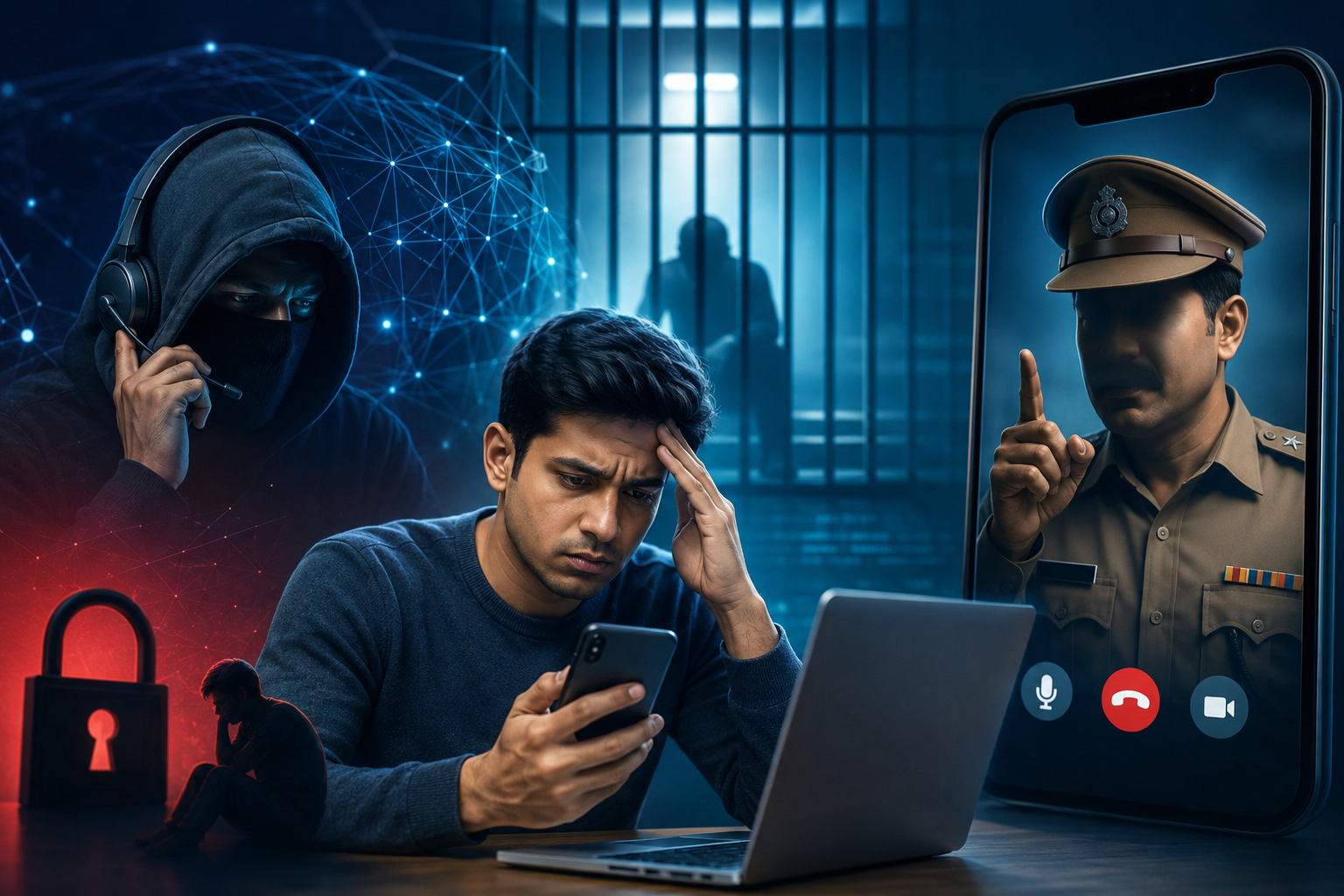
With the rapid growth of digital communication, cyber criminals are constantly finding new ways to deceive innocent people. One of the fastest-growing scams in India is Digital Arrest Fraud. In this scam, fraudsters pretend to be police officers, CBI officers, ED officials, Customs officers, or other government authorities. They threaten victims with fake criminal charges and force them to transfer money to avoid arrest.
Remember one important fact:
No police officer, government agency, or law enforcement department conducts an arrest through a phone call or video call.
Understanding how this scam works is the first step to protecting yourself and your family.
What is Digital Arrest Fraud?
Digital Arrest Fraud is a cyber scam where criminals falsely claim that the victim is involved in illegal activities such as:
- Money laundering
- Drug trafficking
- Identity theft
- Fake bank accounts
- Parcel containing illegal items
- Financial fraud
- Terrorism funding
The fraudsters create fear by saying that an arrest warrant has been issued against the victim. They then demand money to "verify", "clear", or "settle" the case.
Everything they say is fake.
How the Scam Usually Works
Step 1: Fake Call
The victim receives a phone call from someone claiming to be:
- Police Officer
- CBI Officer
- Cyber Crime Officer
- Customs Officer
- Income Tax Officer
- RBI Official
- Telecom Authority
The caller sounds professional and often speaks confidently.
Step 2: Creating Fear
The scammer may say:
- Your Aadhaar has been used in a crime.
- Your SIM card is involved in illegal activity.
- Your bank account is under investigation.
- A parcel sent in your name contains drugs.
- An FIR has been registered against you.
- An arrest warrant has been issued.
The objective is to make the victim panic.
Step 3: Fake Video Call
The fraudster may ask the victim to join a WhatsApp, Skype, Zoom, or other video call.
During the call they may show:
- Fake police uniforms
- Fake office backgrounds
- Fake ID cards
- Fake documents
- Fake arrest warrants
- Fake court notices
These are designed to appear genuine.
Step 4: Digital Arrest
The victim is instructed to:
- Stay on the video call.
- Do not speak to family members.
- Do not leave the room.
- Keep the camera on.
- Follow every instruction.
The victim is psychologically trapped and made to believe they are under "digital arrest."
In reality, there is no such legal procedure.
Step 5: Demand for Money
The scammers ask the victim to transfer money for reasons such as:
- Verification
- Security deposit
- Investigation charges
- Temporary account freeze
- Refundable security amount
- Court settlement
Once the money is transferred, the fraudsters disappear.
Common Warning Signs
Be alert if someone:
- Calls claiming to be from a government agency.
- Threatens immediate arrest.
- Demands secrecy.
- Asks you to stay on a video call for hours.
- Requests bank details or OTP.
- Asks you to transfer money immediately.
- Sends fake legal documents on WhatsApp.
- Pressures you to act without verification.
Red Flags
❌ Immediate arrest over phone
❌ Pressure to transfer money
❌ Threats and intimidation
❌ Requests for OTP or banking credentials
❌ Fake government identity cards
❌ Video call with fake office setup
❌ Asking you not to contact anyone
How to Protect Yourself
Follow these safety tips:
- Stay calm and do not panic.
- Never transfer money because of threats.
- Never share OTPs or banking passwords.
- Verify the caller through official channels.
- Disconnect suspicious calls immediately.
- Inform your family members.
- Block suspicious numbers.
- Report the incident immediately.
What to Do If You Receive Such a Call
- Stay calm.
- End the call immediately.
- Do not make any payment.
- Do not share personal information.
- Save call recordings, screenshots, and messages.
- Inform your bank if you shared financial details.
- Report the incident to the National Cyber Crime Reporting Portal or call the Cyber Crime Helpline (1930).