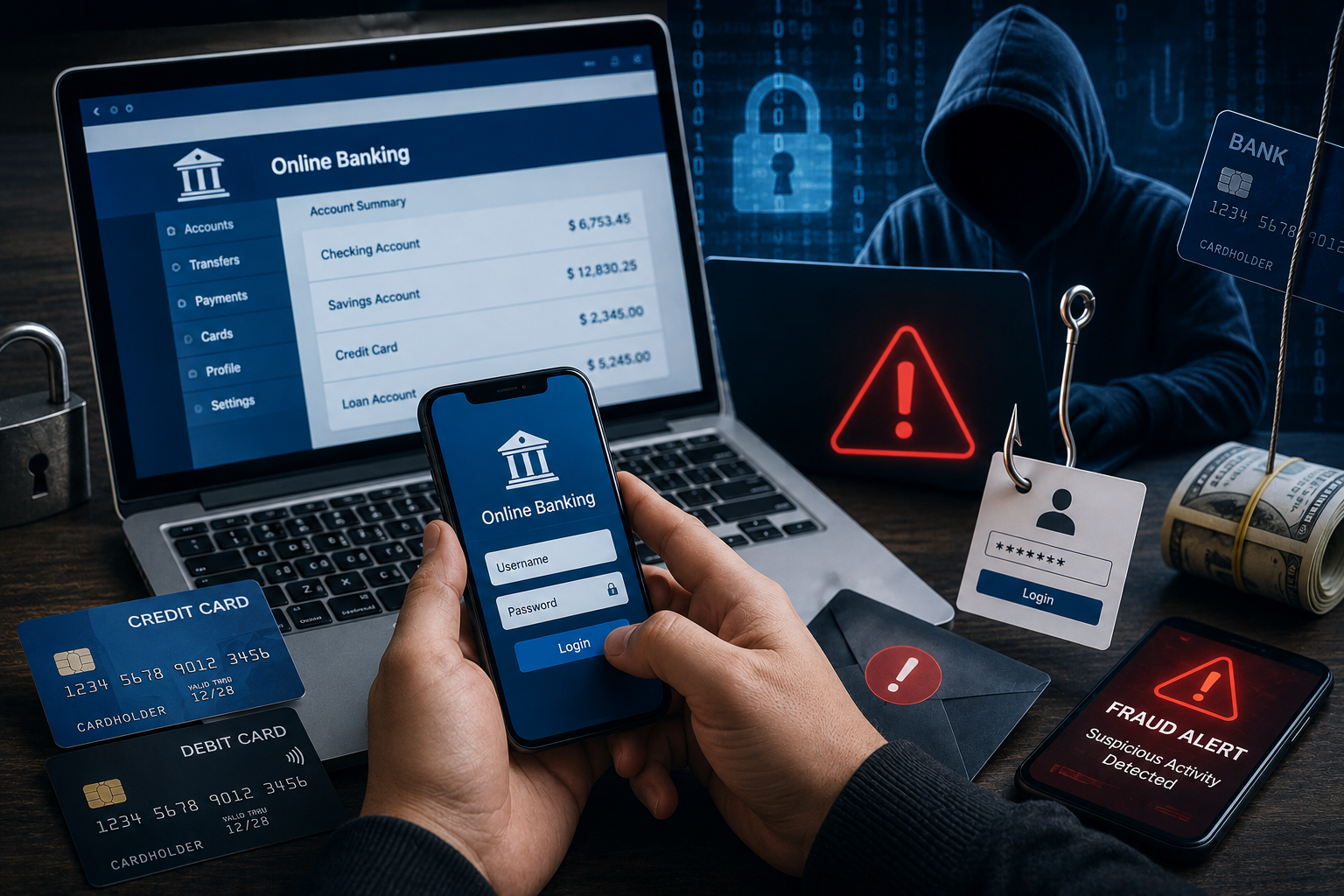
Banking Fraud Awareness: Common Scams, Warning Signs, and How to Protect Yourself
Introduction
Banking services have become more convenient than ever with internet banking, mobile banking, UPI payments, debit cards, credit cards, and digital wallets. While these technologies make financial transactions faster and easier, they also create opportunities for cyber criminals to commit banking fraud.
Every day, thousands of people lose money because of fake phone calls, phishing emails, malicious links, OTP scams, fake banking apps, and social engineering attacks. Most of these scams can be prevented through awareness and safe banking practices.
This article explains what banking fraud is, common types of banking scams, warning signs, and practical steps you can take to protect yourself.
What is Banking Fraud?
Banking Fraud is any illegal act in which criminals deceive individuals or financial institutions to steal money, banking information, or gain unauthorized access to bank accounts.
Simply put:
Banking fraud is the use of deception or illegal methods to steal money or financial information from a bank or its customers.
Simple Example
A person receives a phone call from someone pretending to be a bank employee.
The caller says the customer's bank account will be blocked unless they share their OTP. The customer shares the OTP, and within minutes, money is transferred from the account without permission.
This is a banking fraud.
Why is Banking Fraud Increasing?
Several factors have contributed to the rise of banking fraud:
- Increased online banking usage
- Digital payment systems
- UPI transactions
- Smartphone adoption
- Social engineering attacks
- Lack of cyber awareness
- Fake mobile applications
- Data breaches exposing personal information
Cyber criminals exploit trust, fear, urgency, and lack of awareness to deceive victims.
Common Types of Banking Fraud
1. Phishing Fraud
Fraudsters send fake emails or SMS messages pretending to be from a bank.
They ask customers to click a malicious link and enter:
- Internet banking credentials
- ATM PIN
- Debit card details
- OTP
- CVV
The stolen information is then used to access the victim's bank account.
2. Vishing (Voice Call Fraud)
Scammers call victims pretending to be:
- Bank officials
- RBI representatives
- Customer care executives
- KYC verification officers
They ask for confidential banking information over the phone.
Remember:
Banks never ask for OTP, PIN, password, or CVV over phone calls.
3. Smishing (SMS Fraud)
Victims receive fake SMS messages claiming:
- KYC expired
- Account blocked
- Reward points available
- Income tax refund
- Loan approval
- Credit card upgrade
These messages contain fraudulent links designed to steal banking information.
4. OTP Fraud
Fraudsters convince victims to share the One-Time Password (OTP) received on their mobile phone.
Once the OTP is shared, unauthorized transactions are completed.
5. Debit and Credit Card Fraud
Criminals steal card information through:
- Card skimming devices
- Hidden cameras
- Fake POS machines
- Data breaches
- Phishing websites
The stolen card details are used for unauthorized purchases or cash withdrawals.
6. Fake Banking Apps
Cyber criminals create fake mobile banking applications that look similar to genuine bank apps.
Victims unknowingly install these apps and enter their login credentials, allowing fraudsters to access their accounts.
7. Internet Banking Fraud
Attackers gain unauthorized access to online banking accounts using:
- Stolen passwords
- Malware
- Keyloggers
- Phishing attacks
- Credential stuffing
8. UPI Fraud
UPI fraud includes scams involving:
- Fake payment requests
- QR code scams
- Screen-sharing apps
- Fake customer support
- Collect request scams
Never approve a UPI collect request unless you are sure you are making a payment.
9. SIM Swap Fraud
Fraudsters obtain a duplicate SIM card linked to the victim's mobile number.
Once activated, they receive OTPs and banking alerts, allowing them to access bank accounts.
10. Loan and Investment Fraud
Victims are promised:
- Instant loans
- Guaranteed investment returns
- High profits
- Low-interest loans
Fraudsters collect processing fees or personal banking information and disappear.
Common Warning Signs
Be cautious if someone:
- Asks for your OTP.
- Requests your ATM PIN or CVV.
- Creates urgency or panic.
- Claims your account will be blocked immediately.
- Asks you to install an unknown app.
- Sends suspicious links via SMS or email.
- Promises unrealistic financial rewards.
- Requests remote access to your phone.
Red Flags
❌ Share your OTP immediately.
❌ Your KYC will expire today.
❌ Click this urgent banking link.
❌ Update your account now.
❌ Download this banking application.
❌ Install AnyDesk or TeamViewer.
❌ Transfer money for verification.
How to Protect Yourself
Follow these banking safety tips:
- Never share your OTP with anyone.
- Keep your ATM PIN confidential.
- Never share your internet banking password.
- Download banking apps only from official app stores.
- Enable transaction alerts.
- Use strong and unique passwords.
- Enable Two-Factor Authentication (2FA) where available.
- Verify suspicious calls directly with your bank.
- Check your bank statements regularly.
- Keep your mobile number updated with your bank.
- Lock your debit or credit card immediately if it is lost.
- Use secure Wi-Fi while accessing internet banking.
- Avoid clicking links from unknown sources.
What to Do If You Become a Victim
If you suspect banking fraud:
- Contact your bank immediately.
- Block your debit or credit card.
- Change your internet banking password.
- Report unauthorized transactions to the bank without delay.
- Save screenshots, SMS messages, emails, and transaction details as evidence.
- Report the incident to the National Cyber Crime Reporting Portal or call the Cyber Crime Helpline (1930).
- Monitor your bank account for further suspicious activity.